Zhongdian (Shangri-La), China
Most of the day was spent driving from Lijiang to Shangri-La.
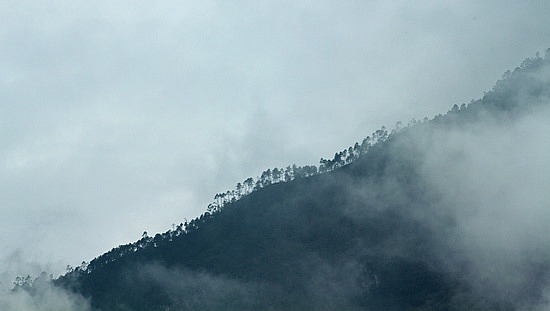
After a quick pitstop where we found a small temple nestled in a misty mountain side setting, our first scheduled stop was at the first bend of the Yangtze River. This is the point where the river turns to begin travelling eastward toward Shanghai (instead of heading straight down to the South China Sea).
A quick tour of the town of Shigu was next on the itinerary. Shigu means stone drum that commemorates the defeat of invading Tibetans hundreds of years ago. The town is an important location on the Tea Road and the river crossing from Yunnan Province to the old Tibet has been used by everyone from Kublai Khan to the Red Army. The walk through town was exciting as it was market day.
We visited an area where the Yangtze travels through a narrow river gorge. It is said to be so narrow that a tiger was able to jump across it when being hunted – hence the name, Tiger Leaping Gorge.
We then drove to our hotel in Shangri-La. Shangri-La was renamed after Jame Hilton’s fictional paradise by the Chinese government to increase tourism to the area. The town was called Zhongdian (Chinese) or Gyalthan (Tibetan) previously. The town is on the Tibetan Plateau and was part of Tibet until the Chinese government redrew the borders after the 1950 invasion. To finish the day we headed to town for dinner, watched the town’s communal exercise/dance session and attended a very well produced minority dance performance.


 2GuysTravel