Cusco, Peru
The day started off with us almost missing our 4 am ride to the airport as we didn’t know that the conference organizers had made the arrangements. Thanks Heavens I couldn’t sleep and noticed a note under the door 20 minutes before we were supposed to leave.
We were heading to Cusco, the old capital of the Incan empire. The Lima airport security check was extremely quick and efficient. I think that they are used to dealing with huge volumes of travellers on a daily basis. Arriving at our gate, we discovered that our flight had been cancelled. No need to worry: there are more flights leaving for Cusco then there are subways running during Toronto rush hour. By the time we made it to the desk they had already booked us on a flight leaving 20 minutes later.
Cups of steaming coca tea were waiting for us upon arrival at our hotel. I had 4 cups but they didn’t help at all. I got bad altitude sickness and had a hard day in front of me. (Lima is basically sea level and Cusco is just over 3400m/11,200 ft.). I was short of breath when we started the tour of the city and surrounding area. By the time that we finished, I had a brutal headache, could barely carry myself and was slightly less than chipper. On the plus side, my nails were a lovely shade of purplish blue.
We dragged ourselves to Cusco city square where we found a massive celebration taking place. Streams of masked dancers circled the square celebrating something or other. (I hope that you appreciate the detail that goes into this blog.)
We met up with our tour group who informed us that today was our ‘training day’. We toured the Cusco cathedral and several archaeological sites while hearing about the history, conquest and subsequent destruction of the Incan society and all that they created.
There were a few highlights that pierced through the oxygen deprivation haze. In the Cusco cathedral (built on the ruins of the Incan’s holiest temple) was a painting of the Incan Last Supper. The retelling of the iconic Last Supper was created by a local Cusco artist and packed with symbols of regional culture. For example, they dined on cuy (guinea pig). In my opinion, the strongest message was told by using the face of Pizarro (the leader of the conquistadors) as that of Judas.
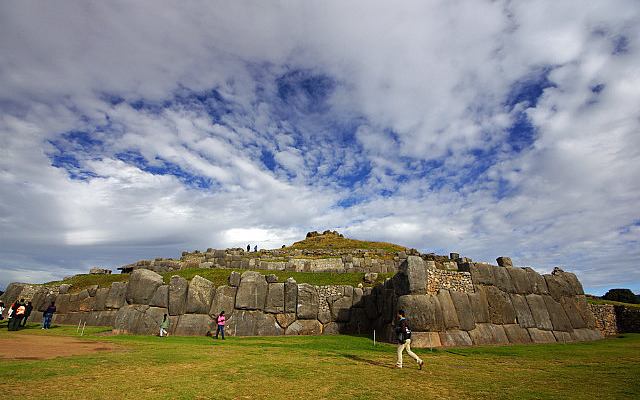
The second highlight were the stone retaining walls of Sacsayhuaman. The massive boulders, the largest used anywhere in the Incan territory, made a huge impression and foreshadowed the amazing stone work that we would see over the coming days.
We collapsed in bed by 8 pm (when André finally succumbed to the altitude) and settled in for a fitful sleep.


 2GuysTravel